
DTC Brand Growth Plateau: Why It Happens and What Breaks the Ceiling
In this article
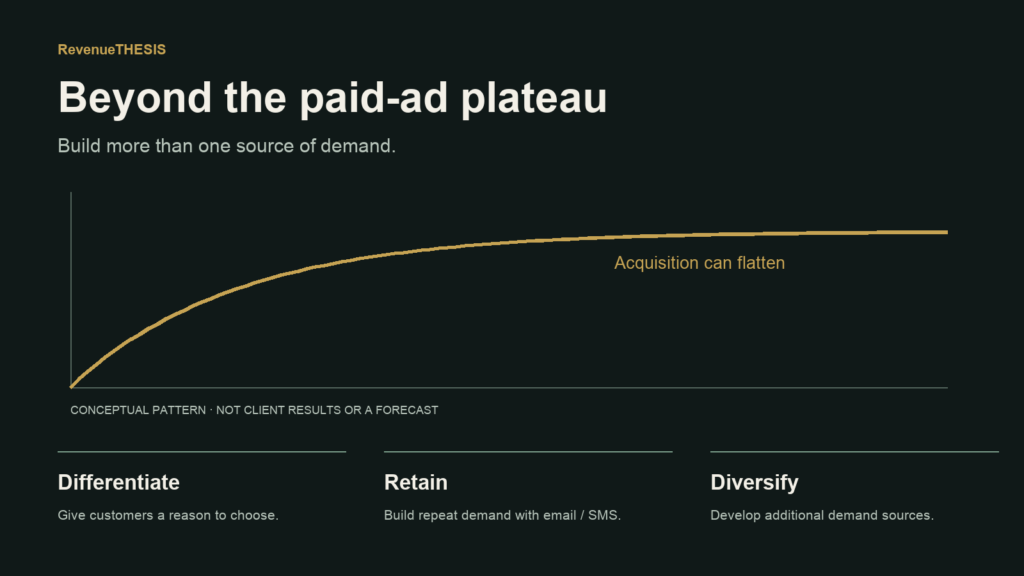
A DTC growth plateau can begin with a familiar pattern: advertising spend rises, but new customers and profit stop keeping pace. This can happen across paid search, Shopping, paid social, video and display. The useful question is where the constraint sits: demand, campaign execution, the offer, conversion or repeat purchasing.
Paid advertising can remain a productive part of the business. The goal is to understand what each additional dollar contributes and build a growth model that can support it.
When Paid Acquisition Becomes a Bottleneck
A direct-to-consumer brand that relies heavily on advertising may have few other sources of demand ready when acquisition gets more expensive. Retail partnerships, organic search, referrals and returning customers can provide additional routes to revenue, but each takes deliberate work.
Dependence is different from poor campaign management. A well-run account can encounter limited profitable demand; an account with plenty of opportunity can still lose money through weak targeting, creative, product data or landing pages. Diagnose both before deciding to increase spend or replace a channel.
Check the Constraint by Advertising Channel
- Paid search: Review search terms, intent, branded versus non-branded demand, landing-page relevance and conversion quality. Buying more clicks from people already looking for your brand may improve reported returns without adding much new demand.
- Shopping and automated cross-channel campaigns: Check product-feed accuracy, pricing, availability, product-level margins and the mix of new versus returning customers. A strong account-wide return can hide products that are unprofitable after fulfillment and returns.
- Paid social: Examine creative fatigue, audience overlap, the strength of the offer and the journey after the click. Fresh creative and better message-to-page alignment may improve performance; rising costs alone do not prove a platform has stopped working.
- Video, display and other networks: Assess audience fit, placement quality and how exposure contributes to later demand. A click or view is not the same as a qualified customer. Choose measurement and test periods that fit the campaign’s role.
These channels interact. Someone may discover a product through a video, search for the brand later and purchase after an email. Platform reports can claim credit for the same sale, so compare them with store revenue and customer-level evidence rather than adding their attributed revenue together.
Measure Profitable Growth, Not Just Reported ROAS
Start with new-customer acquisition cost, contribution margin after advertising and the time it takes to recover acquisition cost. Review repeat purchases by customer cohort instead of assuming every new buyer will eventually become profitable.
Compare similar periods and account for promotions, seasonality, stock shortages and tracking changes. Then separate traffic cost from conversion rate and order value. This helps distinguish an advertising problem from a product, pricing or checkout problem.
For example, if clicks remain steady but purchases fall, examine the offer and shopping experience before buying more traffic. If conversions remain healthy but acquisition costs rise as budgets increase, test whether the next audience or search opportunity can support your margins.
Strengthen the Offer and Build Additional Demand
Clear differentiation gives customers a reason to choose you. It should be visible in the ad, product page and buying experience: who the product is for, what makes it useful and what evidence supports that promise. Campaign assets may need to change alongside the offer.
Email and SMS can support repeat demand without paying for another advertising introduction every time, although these channels still have costs and depend on permission and useful communication. Our guide to the first retention flow to build offers a practical starting point.
Organic search, referrals and suitable partnerships can broaden the mix. Add channels where you have a credible customer opportunity and the capacity to execute. Opening more advertising accounts without a clear role, budget and success measure can spread resources too thin.
Common Questions
Should we reduce paid advertising when growth stalls? +
Not automatically. Identify which campaigns and products contribute profitable incremental sales, protect what works and isolate weaker areas for testing. Budget decisions should reflect margins, cash flow and customer quality, not a blanket judgment about paid ads.
How do we know whether we depend too heavily on paid ads? +
Review new-customer sources, repeat-purchase revenue and how sales have responded to previous spend changes. If continued growth requires steadily more advertising with little improvement in profit, investigate the dependence. Attribution is imperfect, so use several measures and avoid abruptly stopping all spend just to find out.
How RevenueTHESIS Approaches a DTC Plateau
We look at acquisition, conversion, retention and positioning together in our DTC growth work. Our Paid Ad Management service covers research, audience and network selection, budget planning, structured campaigns and ongoing review. We can create supporting campaign assets or collaborate with your marketing and creative team.
Where the challenge spans the business, fractional growth leadership can coordinate the priorities. Request a discovery call to discuss where growth has stalled and what you have already tried.